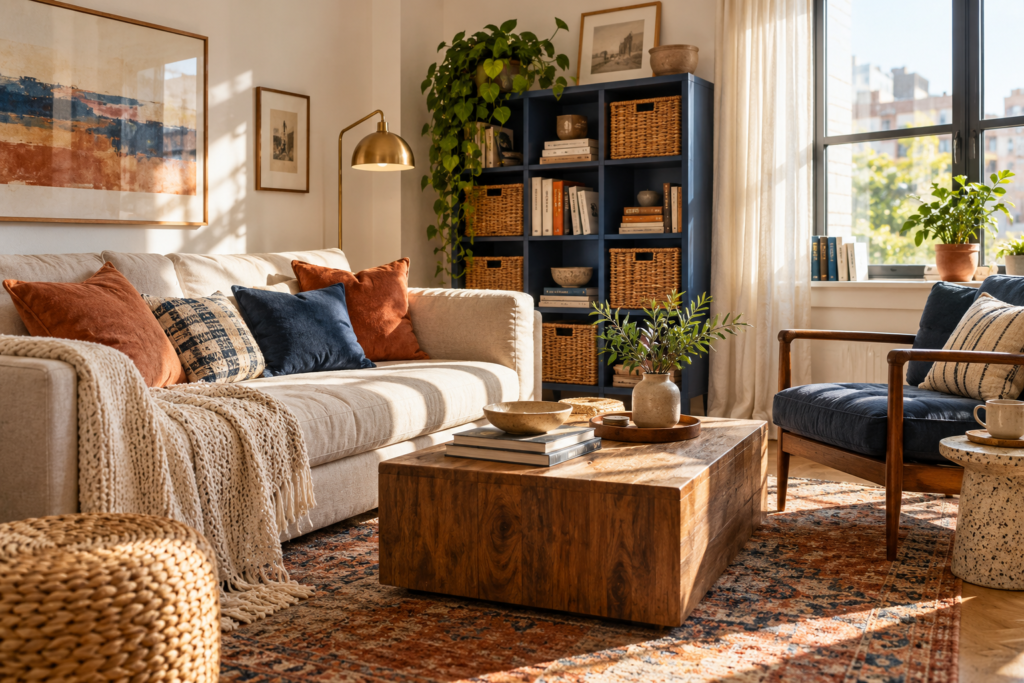
A small living room has to hold the things you actually use: blankets, remotes, books, chargers, and sometimes toys or work supplies. The challenge is giving those belongings a home while keeping enough space to sit comfortably and move around.
The most useful small living room storage ideas start with your routine. A basket beside your favorite seat may solve more than a large cabinet across the room. Before buying anything, identify what needs storing, where you use it, and which existing furniture could work harder.
Affiliate disclosure: This article contains affiliate links. As an Amazon Associate I earn from qualifying purchases.
1. Start with a ten-minute clutter check
Look at the room before tidying it. What has gathered on the coffee table, sofa, and floor? These are clues to where storage is missing or inconvenient.
Sort those items into three groups:
- Keep here: Things regularly used in the living room.
- Move elsewhere: Items that belong in another room.
- Let go: Things you no longer need, use, or want.
Then give the “keep here” items a specific destination. For example, remotes might need one drawer, throws one basket, and current reading one shelf.
Try this: If mail collects beside the sofa, decide whether the living room really needs a mail tray. Moving it to a more useful place may solve the problem without adding storage furniture.
2. Choose storage for the belongings you have
Different storage solves different problems. A deep basket works for blankets but can make small cables difficult to find. A shallow tray keeps remotes accessible but won’t hide bulky cushions.
| What needs a home? | Storage to consider | Check before choosing |
|---|---|---|
| Throws and spare cushions | Storage ottoman or large basket | Usable capacity and easy access |
| Remotes and charging cables | Drawer with a small divider or tray | Drawer dimensions and accessibility |
| Current books and magazines | Lower shelf or upright basket | Whether items are easy to see and retrieve |
| Small toys | Lightweight, easy-to-reach containers | Suitability for the child and manufacturer’s guidance |
| Everyday bags | Designated hook or entryway storage | Whether the location obstructs movement |
Use containers you already own to test the arrangement. If a temporary basket stays useful for a week, you’ll have a clearer idea of what a permanent replacement needs to do.
3. Choose furniture that does two jobs
In a small room, storage furniture earns its place when it replaces something you already need. A side table with a drawer can provide a surface for a drink and a home for remotes. A storage ottoman may combine seating with space for throws.
Adding another piece of furniture solely because it has storage can make the room harder to use. First ask: What will this replace, and what will it hold?
A storage bench to consider: SONGMICS Storage Ottoman
The SONGMICS Storage Ottoman in Summer Sand is an option to consider if you need enclosed storage and have room for a larger bench. The product listing shows a tufted lid and wood legs.
The listed exterior dimensions are approximately 47.6 inches wide, 19.7 inches deep, and 16.5 inches high. That is a substantial footprint for a small living room. Mark it out on the floor with painter’s tape suitable for your flooring before ordering.
Check whether you can comfortably walk past it, open the lid, and reach nearby seating. If it sits against a wall, confirm how much clearance the lid requires.
May suit: A room with space for a bench that replaces another piece of furniture.
May not suit: A tight corner, a narrow walkway, or a room already crowded with seating.
Check the current listing for interior capacity, permitted uses, care instructions, assembly, and return terms. We have not personally tested this product.
View the SONGMICS Storage Ottoman on Amazon (paid link)
A narrow side table for everyday essentials
The Signature Design by Ashley Breegin chairside end table offers a drawer with a removable tray and a lower shelf. These features could help keep remotes and other small belongings close to the sofa.
The listing describes a compact 13-inch width, but width alone doesn’t establish whether it will fit. Check its full footprint and height, compare it with your sofa arm, and leave space to pull out the drawer.
Its medium-brown finish may work with warm wood tones. Before planning to add a basket underneath, measure the usable shelf space.
May suit: A space beside the sofa where you need both a small surface and accessible storage.
May not suit: A position where the open drawer would obstruct a walkway or hit nearby furniture.
This suggestion is based on the product listing; we have not personally tested it.
View the Ashley Breegin End Table on Amazon (paid link)
4. Use vertical space without crowding every shelf
A taller shelving unit can hold more belongings within a limited floor footprint. However, exposed shelves can also make everyday clutter more noticeable.
Group small loose items in containers and keep frequently used belongings within comfortable reach. Leave some shelf space empty so books and decorative pieces remain easy to access.
Start by rearranging an existing shelf before buying another unit. Moving rarely used items elsewhere may free enough room for the things you need nearby.
Follow the manufacturer’s anchoring and load instructions. For wall-mounted storage, check the wall type, required fixings, and installation guidance.
5. Give charging cables one predictable place
Charging cables often spread because there is no convenient destination for them.
Choose one practical charging location near an existing outlet. Store spare cables separately from those used daily, and identify which cable belongs to each device.
If you use adhesive cable clips, check that they suit the surface and cable size. Keep cables out of walking routes, and follow device and charger instructions for ventilation and safe use.
A storage box should help organize accessories; don’t assume it is suitable for enclosing powered chargers or a power strip.
6. Keep storage close to where you use things
An attractive container is unlikely to stay useful if putting something away takes too much effort.
Place a throw basket near the sofa. Keep the remote drawer within reach of the seat where you watch television. Give current reading a smaller space than your whole book collection.
Example: If blankets repeatedly end up on the sofa despite having a home inside a cabinet, try an open basket nearby. Easier access may matter more than hidden storage.
Allow one clear surface for setting down a drink. Every table doesn’t need to display decorations.
7. Test the system with a five-minute reset
At the end of the day:
- Return remotes and small accessories to their designated place.
- Put throws away.
- Move items that belong elsewhere.
- Clear the main table.
- Check that walking routes are unobstructed.
If the same item keeps getting left out, reconsider its storage location or container. The aim is a system that fits your routine.
Before buying: a practical checklist
- Identify exactly what the item must hold.
- Measure the full exterior footprint and available space.
- Check usable interior or shelf dimensions.
- Allow room for doors, drawers, and lids to open.
- Check delivery access, including stairs and doorways.
- Review materials, cleaning instructions, and assembly requirements.
- Confirm current price, availability, and return terms on the retailer’s website.
A calmer room starts with one useful change
Choose the clutter problem that bothers you most and solve that first. It might need a better drawer arrangement, a basket moved closer to the sofa, or fewer belongings in the room.
Useful storage makes everyday life easier. You don’t need to fill every corner or purchase every item in this guide to create a living room that feels comfortable and organized.
Images in this guide are AI-generated decorating illustrations, not photographs of the recommended products.