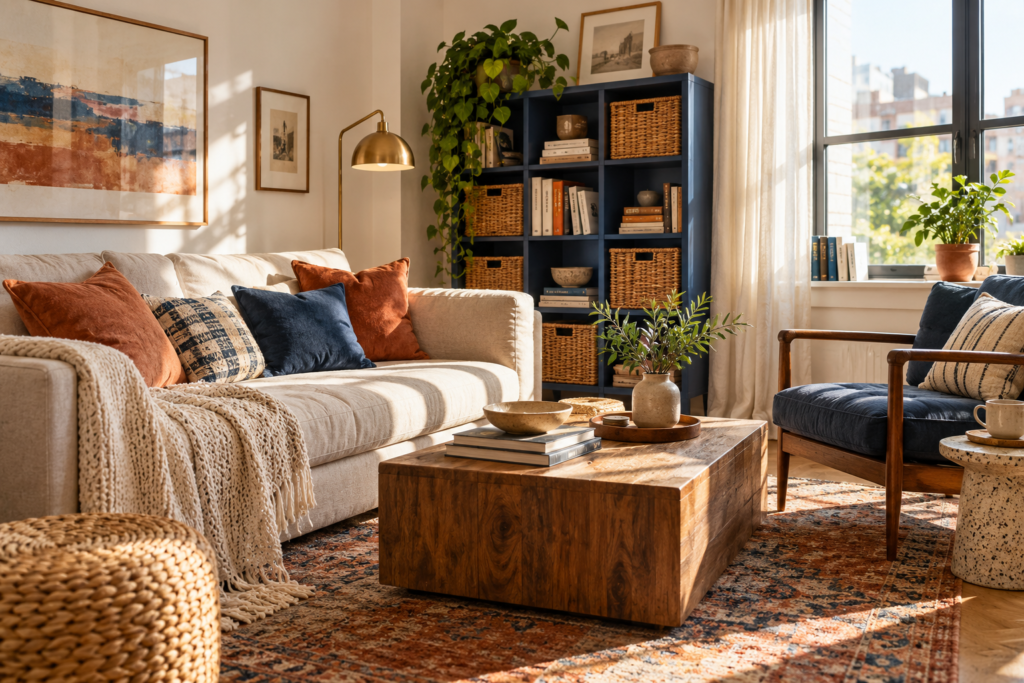
A small living room needs places for everyday things without turning every wall into a cupboard. Start by noticing what actually collects on the coffee table and floor: remotes, throws, books, chargers, mail, and bags. Give each group a nearby home before buying another container.
Begin with the clutter you can see
Spend ten minutes photographing the room from the doorway. The photo often reveals where the visual noise gathers. Make three piles: things used in this room, things that belong elsewhere, and things you no longer need. Measure the space that remains before shopping.
Choose furniture that does two jobs
An ottoman with a lift-up lid can hold throws; a narrow console can provide a landing spot behind a sofa. A side table with a lower shelf can store a basket without taking more floor space. Check both the outside dimensions and the usable inside dimensions before ordering.
Use vertical space carefully
A tall shelf can provide storage while keeping the floor open, but overfilling it makes the room feel busy. Mix closed baskets for small items with open space around books and decor. Anchor tall furniture as directed by the manufacturer, especially in homes with children.
Make the system easy to maintain
Place storage near the point of use. Keep one basket for current reading, one spot for remotes, and a clear surface for setting down a drink. If putting something away takes several steps, simplify the system rather than blaming yourself for not maintaining it.
A practical shopping checklist
- Measure width, depth, height, door swings, and walking clearance.
- Decide what the item must hold before choosing its style.
- Look for materials and cleaning instructions suited to your household.
- Compare delivery, return terms, and assembly requirements.
A calmer room usually comes from better placement and fewer decisions, not more products.